


I’m one of those people who likes to work with some form of ambient noise in the background. I have a roster of old shows (Spaceghost, Seinfeld, IT Crowd, Adventure Time, etc.) I like to cycle through that stream to a TV in my living room - ones I’ve seen so many times I don’t really have to pay attention to them.
While I was working late one night on my computer, the Airport episode of Seinfeld happened to come on. It’s the one where George and Kramer head over to the airport to pick up Seinfeld.
While they’re en route, Kramer’s talking about how much he loves going to the duty-free shop. George, with some derision, scoffs that Kramer isn’t actually saving any real money saying that “duty” is basically nothing - it’s like sales tax. Kramer replies, “Well, I’d still like to stop at the duty-free shop.” It’s pretty catchy, so they start sort of repeating it in a rhythmic way, though not with any particular melody.
Unfortunately this part had the complete opposite effect of acting as a white noise filter and totally derailed my concentration to the point where I found myself joining in and adding melodic elements to it. A few minutes later, I sat down at my piano and plunked out this:
It’s a bit barebones, but the basic melody and chords are there - now it was just a matter of fleshing it out.
The Arrangement
Cue the arrival of the ARRANGER KEYBOARD! Duh duh duh-which alongside keytars is probably one of the COOLEST musical instruments of the 20th century.
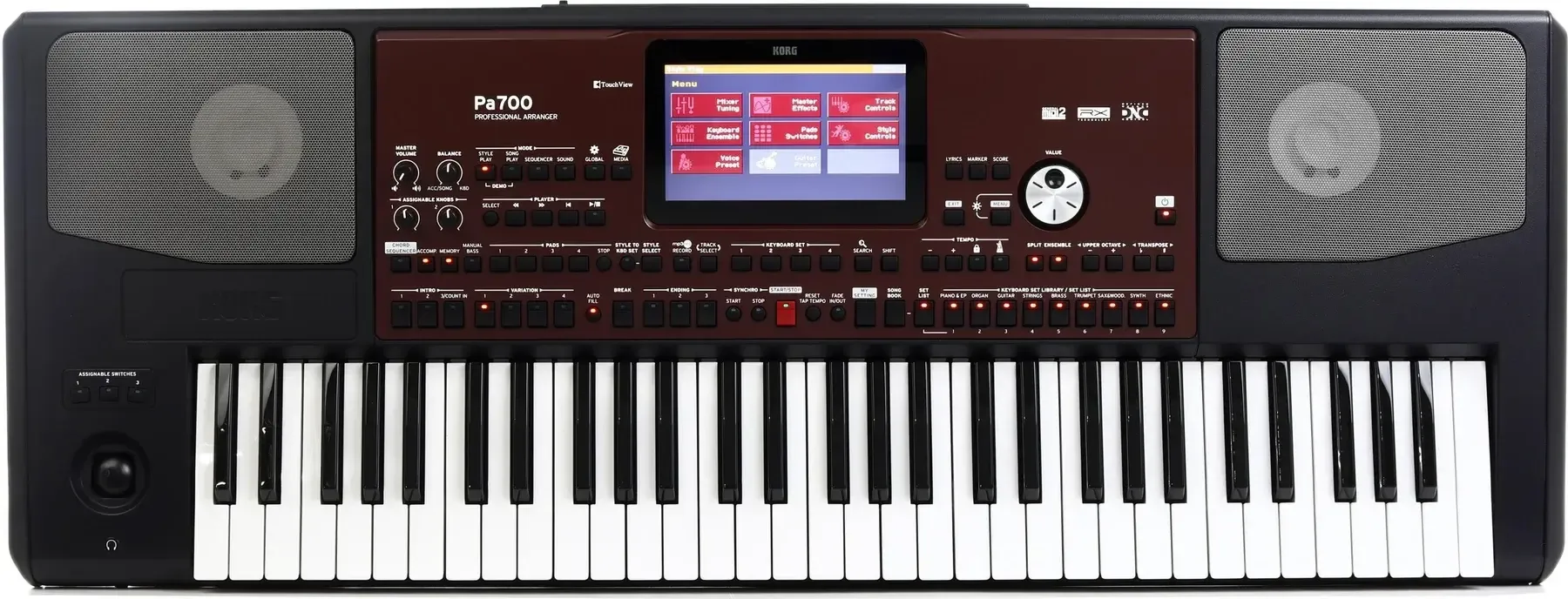
Arrangers are sort of the spiritual successors to those ’70s theatre-style player organs that were so popular back in the day. They had a number of styles (rumba, samba, bossa nova, mambo, waltz, polka, foxtrot, tango, super samba, etc.) preprogrammed in various arpeggiated fashions, which could be controlled by playing chord figurations with the left hand. The right hand would be responsible for playing the main instrumental melody.
Camp as hell, but if you’re a “song and jingle man” then in the words of Mission Hill, they’re basically “oak-veneered fun dispensers.”
So the basic idea is: you pick a style and tempo, then play your chord progression (Amin, Fmaj7, Esus4) with your left hand to conduct the virtual band while your right hand sings out the melody. These days, arranger keyboards are far more sophisticated, with multiple variations, intros, outros, fills, breaks, etc., in order to create a more diverse set-but the principle is still the same.
So the next thing I did was head over to my Yamaha arranger and record this:
In this case, my right hand is playing the sax and later the brass section. Hey not too shabby though the instrument samples are a bit thin - that’s just to be expected. However we’re one step closer having added a big band style and some additional structure and progression to the song.
The Cover
The final step is to feed this audio file into Suno under the Cover option.
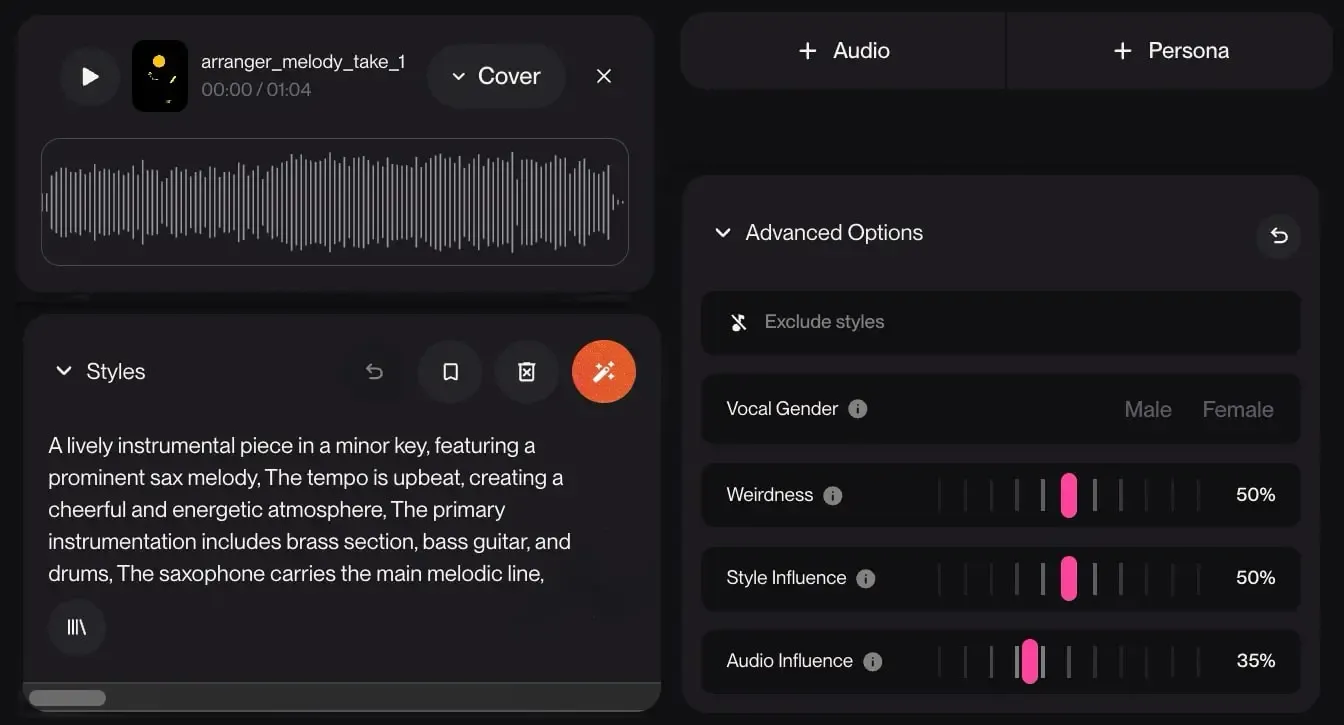
By increasing Audio Influence, you can ensure it doesn’t deviate from your original melody while still allowing it to add richer instruments, fuller percussion, etc. Here’s the final result:
It’s remarkable how faithful it stays to the original piece while drastically increasing the production value. It’s probably a long way off, but the idea of marrying a physical arranger keyboard with real-time orchestration produced by a backing generative model gives me goose chills.
SIDE NOTE
Suno also has the ability to use lyrics through autogeneration or manual entry. While I have no doubt it would do a decent enough job, I wouldn’t really feel comfortable using this feature unless I personally authored the lyrics myself.