

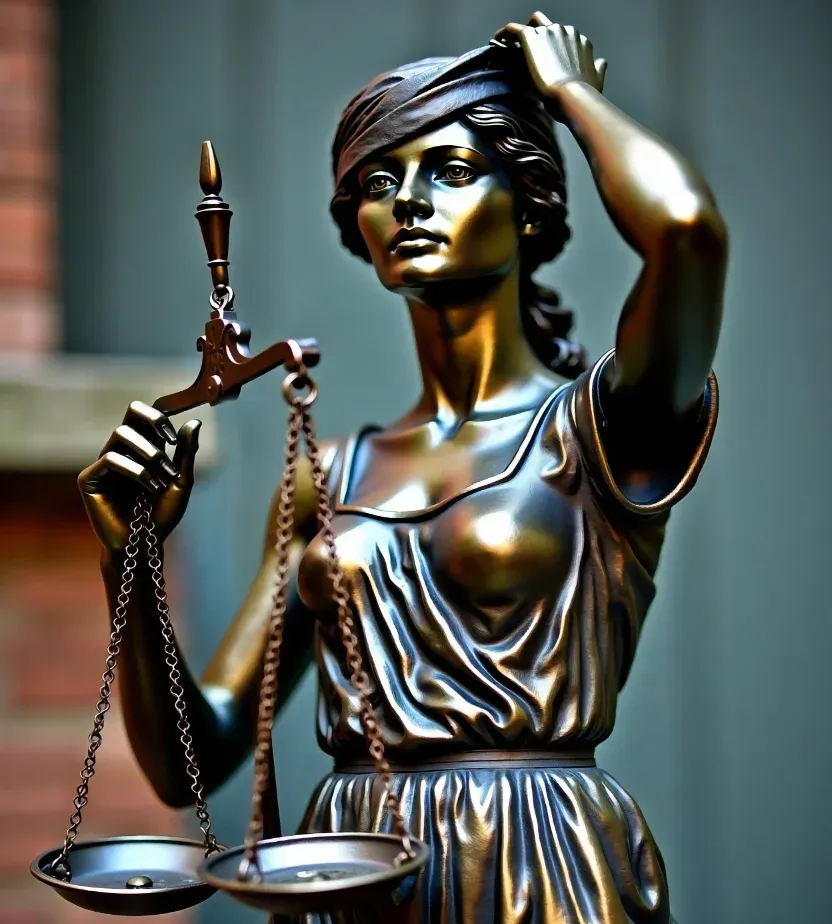
How is it that, despite well-documented studies demonstrating how the halo effect profoundly compromises objectivity and influences our impressions of others, a jury in a court of law is still allowed to physically see the defendant?
For those unfamiliar with this particular cognitive bias, the halo effect is a phenomenon by which positive impressions of a person in one domain can inadvertently leak into other areas.

A 1974 study by Landy & Sigall clearly demonstrated the halo effect by having a group of male college students grade a random assortment of papers (ranging from poorly to well-written) with the catch that 30% of the graders had essays where a photograph of an attractive woman was attached to the paper, 30% received essays where the photograph was that of a more homely female, and the remainder received essays with no photo attached.
Those ostensibly attributed to more conventionally attractive females consistently received higher scores, especially on poorly written essays, indicating a bias toward physical attractiveness when assessing competence in a completely different domain.
Thus, to help mitigate this unintentional bias, we should seal the records from the jury with regards to:
SEALED INFORMATION
- The defendant’s name and family name
- The defendant’s physical appearance
Many of the same procedures used in witness protection could be used to help further anonymize the defendant.
Instead, the accused should be referred to at all times by the proxy “the defendant,” and any attempt by the prosecution to subtly leak personal details (race, religion, name, etc.) should be met with harsh sanctions from the judge.
I would hazard that in 99% of proceedings, there is zero legal justification for the jury needing to see the appearance of the defendant.
As long as we permit a defendant’s appearance to influence the jury, this practice will continue to undermine the legal integrity and fundamental premise of impartiality in our judicial system. After all, is justice not blind?